Uma Vogel · 25 October 2026
Communities in Maelor's Hamlets Forge Networks for Heirloom Seed Exchange
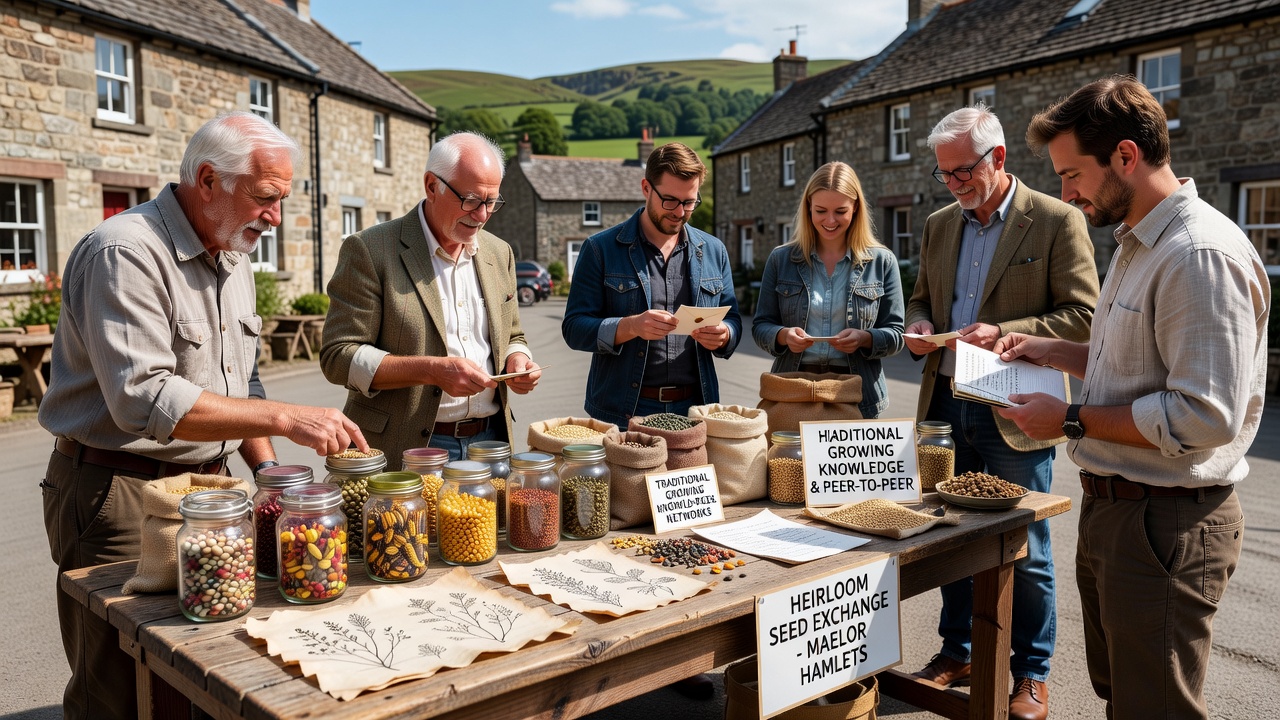
Residents across Maelor's outlying hamlets have established informal peer-to-peer networks focused on sharing heirloom seed varieties and accumulated growing knowledge, and these arrangements operate outside formal agricultural channels while connecting isolated households through direct exchanges. Data from regional surveys conducted in 2025 show participation rates rising steadily as word spreads through word-of-mouth and community gatherings, with networks spanning hamlets such as Erbistock fringes and nearby clusters that previously lacked coordinated seed access.
Origins and Early Development
Initial meetings began in spring 2025 when several households pooled surplus seeds from longstanding garden plots, and by October 2026 the practice had expanded into regular swap events held at village halls and farm outbuildings. Participants document each variety's performance under local soil conditions, noting traits such as drought tolerance or pest resistance that commercial catalogues rarely cover in detail. Records kept by network members reveal that certain potato and brassica lines trace back through multiple generations within the same families, preserving genetic diversity that broader supply chains have narrowed over decades.
Observers note that these exchanges rely on handwritten logs and verbal instruction rather than digital platforms, although some participants have begun photographing plant labels for easier identification during later meetings. The approach mirrors patterns documented in other rural regions where seed sovereignty groups maintain physical collections instead of relying solely on institutional seed banks.
Knowledge Transfer Methods
Traditional growing techniques form the second pillar of the networks, with experienced growers demonstrating spacing, companion planting, and harvest timing suited to Maelor's microclimates. Newer members receive cuttings or root divisions alongside seeds, and follow-up visits allow troubleshooting when crops show unexpected stress. According to records compiled by one hamlet collective, success rates for first-time growers improved after three consecutive seasons of shared observation, as adjustments accumulated from collective trial and error.
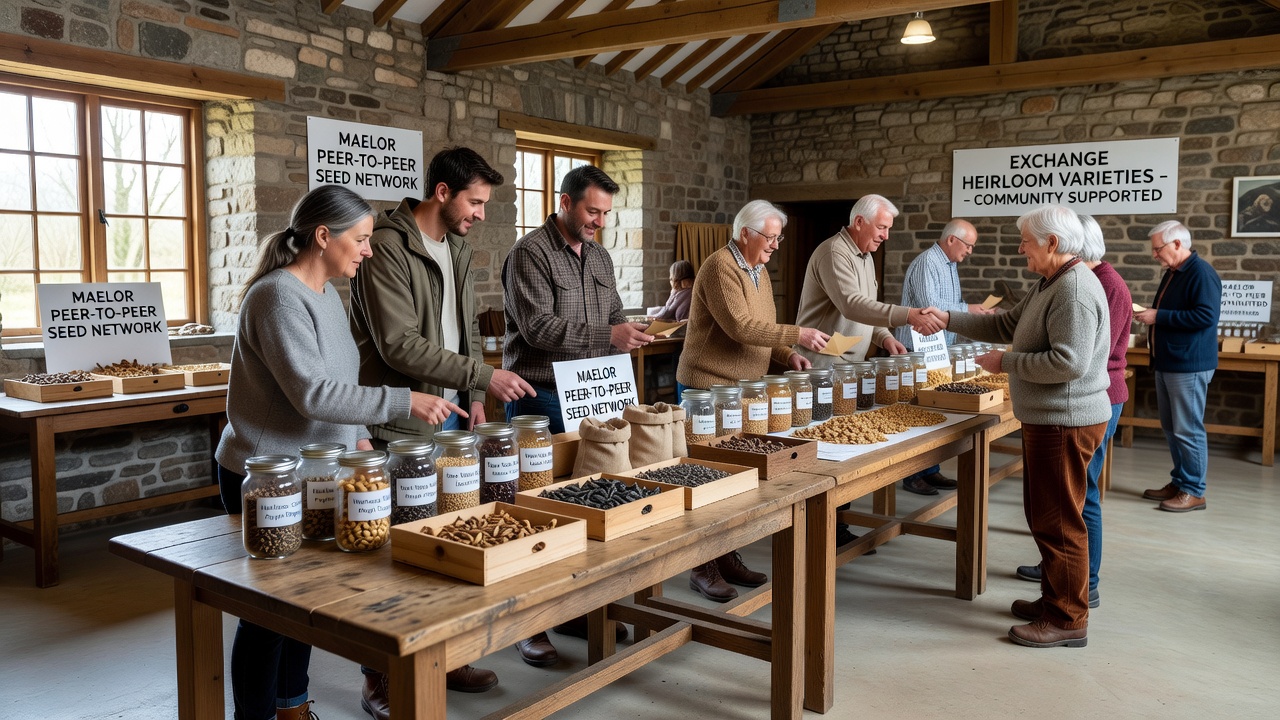
One documented case involved a turnip variety that had disappeared from local markets yet persisted in three household gardens, and its reintroduction through the network restored consistent yields for additional families by autumn 2026. Participants cross-reference performance notes with climate records kept by nearby weather stations to anticipate seasonal shifts, while avoiding any dependence on external advisory services that focus primarily on hybrid cultivars.
Scale and Geographic Reach
By mid-2026 the networks connected at least eight distinct hamlets, with exchange volumes estimated at several hundred seed packets per quarter based on tally sheets maintained by rotating coordinators. Linkages extend across parish boundaries yet remain contained within walking or short vehicle distance, preserving the direct, face-to-face character of each transaction. Figures released by the Maelor Community Archive indicate that heirloom varieties now represent a measurable share of household food production in participating areas, although comprehensive county-wide statistics remain unavailable.
Researchers at Bangor University have begun cataloguing the genetic markers of selected lines contributed by network members, and preliminary findings align with broader European studies on landrace preservation published by the European Cooperative Programme for Plant Genetic Resources. The work proceeds without formal funding, relying instead on volunteer labour and donated greenhouse space during winter months.
Challenges Encountered
Storage conditions present ongoing difficulties, particularly during wet winters when humidity affects seed viability, and several groups have experimented with silica desiccant packets sourced from local hardware suppliers. Pest pressure on certain bean and pea varieties prompted shared experiments with physical barriers rather than chemical treatments, and results circulate through the same peer channels that distribute the seeds themselves. Participants report that maintaining accurate provenance records becomes harder as the number of contributors grows, prompting some hamlets to adopt simple numbered tags tied to ledger entries.
Despite these hurdles, the networks continue to operate without external grants or regulatory oversight, and membership criteria remain limited to residency within the defined hamlet boundaries. This structure keeps decision-making local while allowing gradual expansion as new households request inclusion.
Conclusion
The peer-to-peer seed networks in Maelor's outlying hamlets demonstrate a sustained, community-driven method for maintaining genetic diversity and practical knowledge that commercial systems have largely set aside. Continued documentation of variety performance and exchange volumes will clarify long-term outcomes, while the existing pattern of seasonal gatherings provides a template that similar rural areas may examine for applicability.